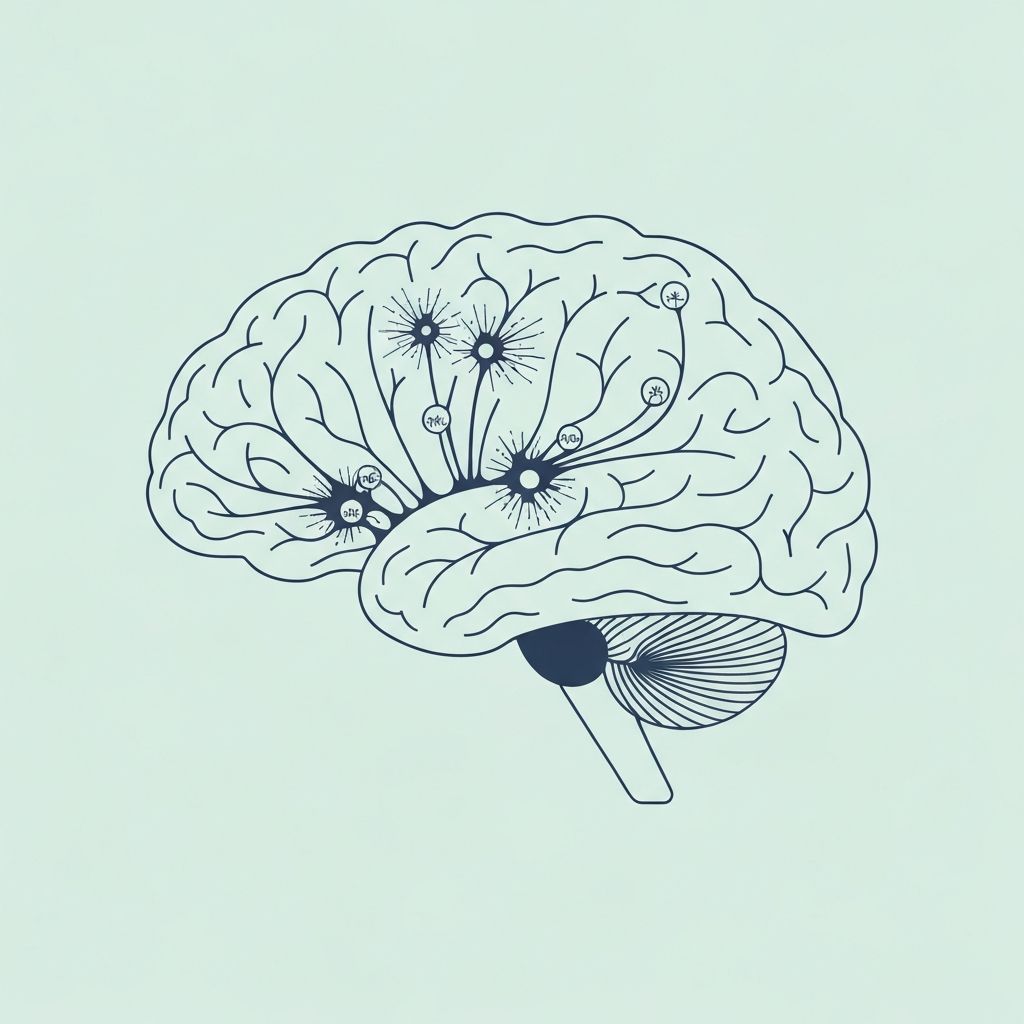
Conditioned Craving Responses to Food Cues
Evidence-based exploration of Pavlovian conditioning in food craving
Overview
Through repeated association, environmental cues—such as visual stimuli, aromas, times of day, or contexts—become linked with the rewarding experience of consuming sweet foods. Over time, exposure to these cues alone, even without consuming food, can trigger craving responses. This phenomenon reflects Pavlovian conditioning, a form of learning in which a previously neutral stimulus becomes associated with a rewarding or aversive stimulus and elicits a response similar to the original stimulus.
Pavlovian Conditioning Principles
Classical Pavlovian conditioning involves:
- Unconditioned stimulus (UCS): The reward-producing stimulus—in this case, sweet taste
- Unconditioned response (UCR): The natural response to the reward—pleasure, dopamine release
- Conditioned stimulus (CS): A neutral cue paired with the reward—such as the sight of a bakery or a particular time of day
- Conditioned response (CR): The learned response to the conditioned stimulus—craving, activation of reward pathways
Through repeated pairings of the conditioned stimulus (cue) with the unconditioned stimulus (sweet taste reward), the cue alone becomes capable of eliciting a craving response, even without consuming the food.
Cue-Reactivity in Food Craving
Cue-reactivity refers to the craving response triggered by exposure to food-related cues. Examples of food cues include:
- Visual cues: sight of desserts, advertisements featuring sweet foods, food packaging
- Olfactory cues: aroma of freshly baked goods, chocolate smell
- Contextual cues: being in a bakery, entering a kitchen, specific times of day traditionally associated with snacking
- Internal cues: emotional states, stress, specific thought patterns
Research demonstrates that individuals differ substantially in their cue-reactivity. Some show strong physiological and psychological responses to food cues, while others show minimal reactions. These individual differences relate to reward system sensitivity and past food experiences.
Neural Basis of Food Cue-Reactivity
Neuroimaging studies reveal that exposure to food cues activates multiple brain regions:
- Nucleus Accumbens: Shows increased activation during exposure to appetizing food cues, reflecting reward anticipation
- Orbitofrontal Cortex: Involved in evaluating the rewarding value of cues
- Insula: Processes interoceptive signals related to appetite and craving
- Prefrontal Cortex: Involved in decision-making; reduced activation may reflect decreased inhibitory control
- Amygdala: Processes emotional significance of cues
In individuals with strong cue-reactivity, these regions show heightened activation in response to food cues compared to controls. This heightened activation reflects enhanced reward salience and stronger learned associations between cues and the reward of eating.
Extinction and Re-sensitization
Once formed, conditioned responses can be modified through extinction—repeated exposure to the cue without the rewarding stimulus. However, extinction is not "forgetting"; rather, it involves learning a new association that competes with the original learned association.
Important phenomena include:
- Spontaneous recovery: Extinguished conditioned responses can spontaneously return after a period of time
- Renewal: Conditioned responses can return when the context in which extinction occurred changes
- Re-sensitization: Single or brief exposures to the unconditioned stimulus (sweet taste) can restore craving responses to cues
Individual Differences in Cue-Reactivity
Factors influencing susceptibility to food cue-reactivity include:
- Early food experiences and childhood conditioning
- Genetic factors affecting dopamine receptor density and sensitivity
- Current hunger and energy balance status
- Stress and emotional state
- Frequency and recency of reward pairing
Evidence from Research
Research findings include:
- Food cues activate reward brain regions even when individuals are not hungry
- Individuals reporting strong cravings show enhanced neural responses to food cues
- Repeated pairings of neutral cues with palatable foods establish strong conditioned responses
- Cue-reactivity can develop rapidly—sometimes after just a few pairings of cue and reward
Implications for Understanding Craving
Cue-reactivity explains why cravings often occur independently of physiological hunger. Through learning, environmental cues become powerful triggers for reward-seeking behaviour and craving, creating a form of appetitive motivation driven by learned associations rather than metabolic need.
Educational content only. No promises of outcomes. This material describes observed principles of learning and conditioning and does not constitute personal advice or intervention strategies. Individual learning histories and cue-reactivity patterns vary substantially. Consult qualified professionals regarding craving-related concerns.
Return to research articles:
← Back to Research Articles